
Choose a Riverside Resident Record
Riverside lacks an all-purpose resident directory. Match each question to its custodian, then check another source. An assessor clue may point to an owner or mailing address; a deed proves party participation. Court and vital indexes differ.
| Record | What It Confirms | Where/Coverage | Access |
|---|---|---|---|
| Assessor roll | Jan. 1 ownership; mailing clue | ACR office, current and archived | Public inspection; owner not online |
| Recorded documents | Party, transaction, legal parcel | ACR recorder, 1974 onward; Gateway older | Free index; copies paid |
| Voter record | Own status, address, qualified fields | SOS and Registrar | Self lookup or restricted application |
| Court index | Party or case role, filing, docket | Superior Court; local 1990s onward | Account and name credits |
| Vital indexes and copies | Event, spouse, parents, place | RUHS, CDPH, historical indexes | Informational or authorized |
| SOS, FBN, and license files | Entity affiliation, agent, status | SOS, ACR, DCA | Indexes and abstracts generally free |
| Probate | Decedent, fiduciary, heirs, filed addresses | Superior Court; July 1994 online, older archive | Paid name and document access |
Start with a clue: address or APN to parcel and deed; event to vital index; business name to filing or license. Treat court results as leads until confirmed.
Start a Riverside Resident Lookup With Place
Geography changes the custodian. Riverside County runs from western Inland Empire cities through San Gorgonio Pass, the Coachella Valley, and Palo Verde Valley. Cities, tribal jurisdictions, libraries, museums, and county departments may hold different parts of one person’s trail. Keep the recorded place label.
Postal and civic names differ. Rubidoux is within Jurupa Valley, Sun City within Menifee, and a Corona postal area can reach Temescal Valley. Record city, county, and postal clues separately. When the goal shifts from one person to a road, the Riverside street directory takes the address route.
Note: A Riverside resident lookup can fail when a postal city, incorporated city, and county jurisdiction are treated as the same place.
Search Riverside Court Records by Division
Riverside Superior Court handles civil, small claims, family, probate, criminal, and traffic matters. Its public-access instructions set the limits of the separate account portal. An account is required, name searches use paid credits, and a case number opens the Register of Actions, calendar, and documents.
| Portal control | Type | Required | What It Does |
|---|---|---|---|
| Search area | Tab or menu | Yes | Index, ROA, Calendar, Documents |
| Case type | Selector | Conditional | Civil, Criminal, Family Law, Probate, Traffic |
| Party or organization name | Text | Index search | Paid credit; exact or broad behavior after login |
| Case number | Text | Register and documents | Opens case records |
| Calendar date | Date | Calendar | Current and future through seven days |
| Court location or department | Selector | Optional | Narrows a result |
Riverside civil starts October 1991, Indio May 1991, Palm Springs September 1993, Corona March 1994, Blythe May 1994, and Hemet and Temecula October 1996. Family law is almost all April 1992 onward; probate July 1994 onward. Riverside criminal starts felony January 1990 and misdemeanor January 1994; other divisions run May 1990 through November 1996.
Name credits cost $1 for one name, $3.50 for five, $5 for ten, $25 for 75, or $250 for unlimited use for 30 days. Court-conducted searches are $15 per name. Copies cost $1 per page for the first five, then $0.50, capped at $50 per document under Government Code §68150(h).
Separate Same-Name Riverside Resident Results
A court result is an index lead. It can show the case number, caption, type, filing date, status, parties, courthouse, Register entries, hearing details, and downloads. Documents may stay limited by access rules.
- Case number and caption
- Case type, category, and filing date
- Status, parties, and party roles
- Courthouse and Register of Actions entries
- Document title, filing date, and filing party
- Hearing date, time, and department
- Downloadable documents allowed by court rules
Files can disappear online when purged under Government Code §68152. A clerk terminal may show material unavailable remotely, but it does not bypass a seal. For a missing search, RI-MC002 can be mailed or taken in person with name, location, type, years, contact details, payment, and copy choices. RI-MC011 identifies a case and document for regular or certified copies.
Same-name match. A same-name result only shares a spelling. It does not establish identity, residence, or relationship.
Verification rule. Compare at least two independent details, such as an APN or transaction, spouse, profession, city, or case chronology. Preserve middle initials, suffixes, aliases, and name order.
Verify One Riverside Resident
A resident lookup moves from a clue to a record. Note the name form, place, date range, and reason for each check.
- Normalize the name, then preserve middle initials, suffixes, aliases, and alternate name order.
- Use RivCoView to search an address or APN. Owner identity is withheld online, so use an ACR public-service computer for the owner search under Revenue and Taxation Code §408.
- Run recorded parties and the court name search, comparing the APN, transaction, spouse, city, profession, or case chronology.
- Check a vital index, license, or business filing. Treat a deed as proof of instrument participation, not proof of present occupancy.
- Order a custodian copy or send a narrow request when the index stops.
- Docket
- The running case history, including filings, entries, and hearing events.
- Index versus image
- An index is a finding aid. An image or copy is the filed document and may require payment or permission.
- Certified copy
- A custodian-attested copy issued for an authorized purpose, distinct from an informational copy or screen result.
The recorder index reaches January 1, 1974; pre-1975 research goes to Gateway Riverside. ACR copy orders support online, in-person, and mail access. Copies cost $8 for the first page, $1 for each added page, and $2 for certification; online cards add 2.15 percent. Mail requests identify type, parties, date, and APN.
Order Riverside Vital Records Correctly
Riverside University Health System (RUHS) handles county birth, death, and fetal-death records. ACR handles marriage and confidential marriage. CDPH is statewide; Superior Court controls divorce. California has no fixed 50, 75, or 100-year opening date. Choose informational or authorized certified access.
- Birth
- RUHS or CDPH. Informational copies are open; authorized certified copies go to statutory persons. 2026 fees: county $34, CDPH $31.
- Death
- RUHS or CDPH. Informational and authorized categories differ. The 2026 fee is $26.
- Public marriage
- ACR County Clerk or CDPH. Informational copies are generally available; certified access depends on eligibility. CDPH lists $19 for 2026; verify the county fee.
- Confidential marriage
- The issuing County Clerk keeps the copy. Parties or a court-authorized requester may access it under Family Code §509; the county fee applies.
- Divorce or dissolution
- The Superior Court file controls. CDPH lists an $18 dissolution certificate for 2026, but it does not replace the decree.
- Fetal death or stillbirth
- RUHS and CDPH apply eligibility rules. 2026 fees: $23 fetal death and $28 stillbirth through CDPH.
County mail applications go to RUHS Office of Vital Records, P.O. Box 7600, Riverside, CA 92513, 951-358-5068. Forms ask for event facts, relationship, copy type, payment, and a notarized statement when required. Use a County of Riverside check or money order. CDPH applications use a U.S.-bank check or money order, never cash. The CDPH fee schedule lists statewide amounts. Archives, FamilySearch, libraries, newspapers, and cemeteries supply clues.
Note: Riverside and California vital fees changed January 1, 2026; copy category and custodian affect cost.
Trace a Riverside Heir, Parent, or Classmate
Human questions call for different records. Probate is the official heir route, while adoption searches use California’s information, mutual-consent, or court process. A school connection is more likely in a yearbook, alumni publication, newspaper, or local archive than in a current roll.
- Heir: connect the probate case, petitions or notices, and successor deeds.
- Birth parent: use official California adoption channels; original birth and adoption records remain sealed absent a lawful process.
- Classmate: pair a yearbook with a directory, newspaper, alumni archive, or obituary, and treat the result as historical.
Probate online coverage is almost all July 1994 forward; older archive work remains useful. The Riverside historical city directory provides household context, but an entry does not prove a current identity or address.
Check Riverside Business and License Records
Business filings test affiliation, not residence. DCA records show license status and discipline; SOS filings show entity relationships. ACR fictitious-business-name records connect a DBA to a registrant, while the Controller’s free ClaimIt search can offer a prior city or ZIP clue. The Controller’s unclaimed-property information confirms that claims are free.
| Lookup | Fields | Result Clues |
|---|---|---|
| DCA License Search | Board, type or number, first or last name, business, city, county | Status, dates, address, discipline links |
| SOS bizfile | Entity name or number; C plus seven digits for corporations; 12 digits for LLCs and LPs | Status, jurisdiction, addresses, agent, imaged Statements |
| ACR Fictitious Business Name | Business, registrant or owner, filing number and date | Local DBA operator and address clue |
| Controller ClaimIt | Required last or business name or property ID; optional first, city, ZIP | Reported owner and address clue; free search |
Begin with the California Department of Consumer Affairs License Search.
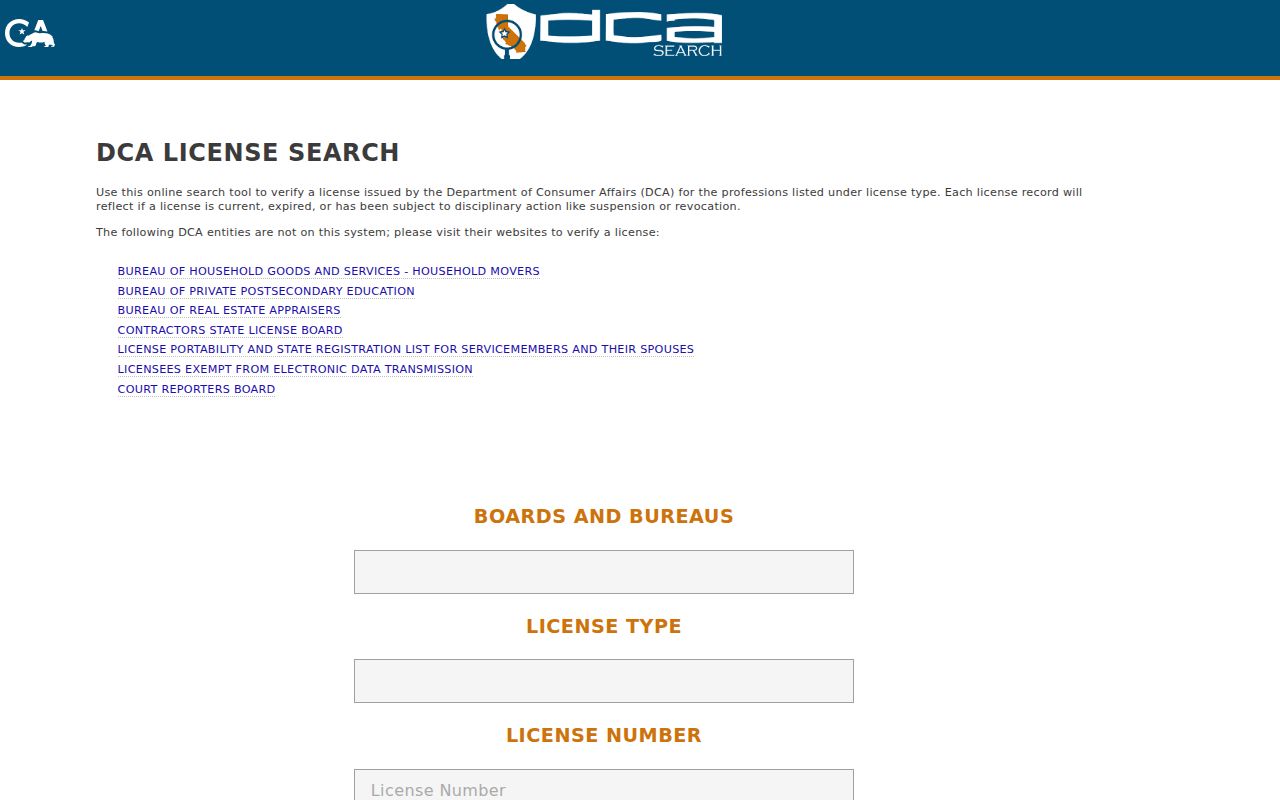
DCA filters by board, type, name, city, or county, then returns status.
For an entity trail, use the California Secretary of State bizfile Online Business Search.
SOS name search is case-insensitive and begins-with; statements can show agents, addresses, managers, or officers.
Use Riverside Custody and Registry Tools
Custody and registry tools answer narrow questions. The Sheriff covers county custody, CDCR state custody, and Megan’s Law permitted categories. A charge is an accusation until disposition; absence from display is not proof that no record exists.
For county custody, use the Riverside Sheriff inmate information system.
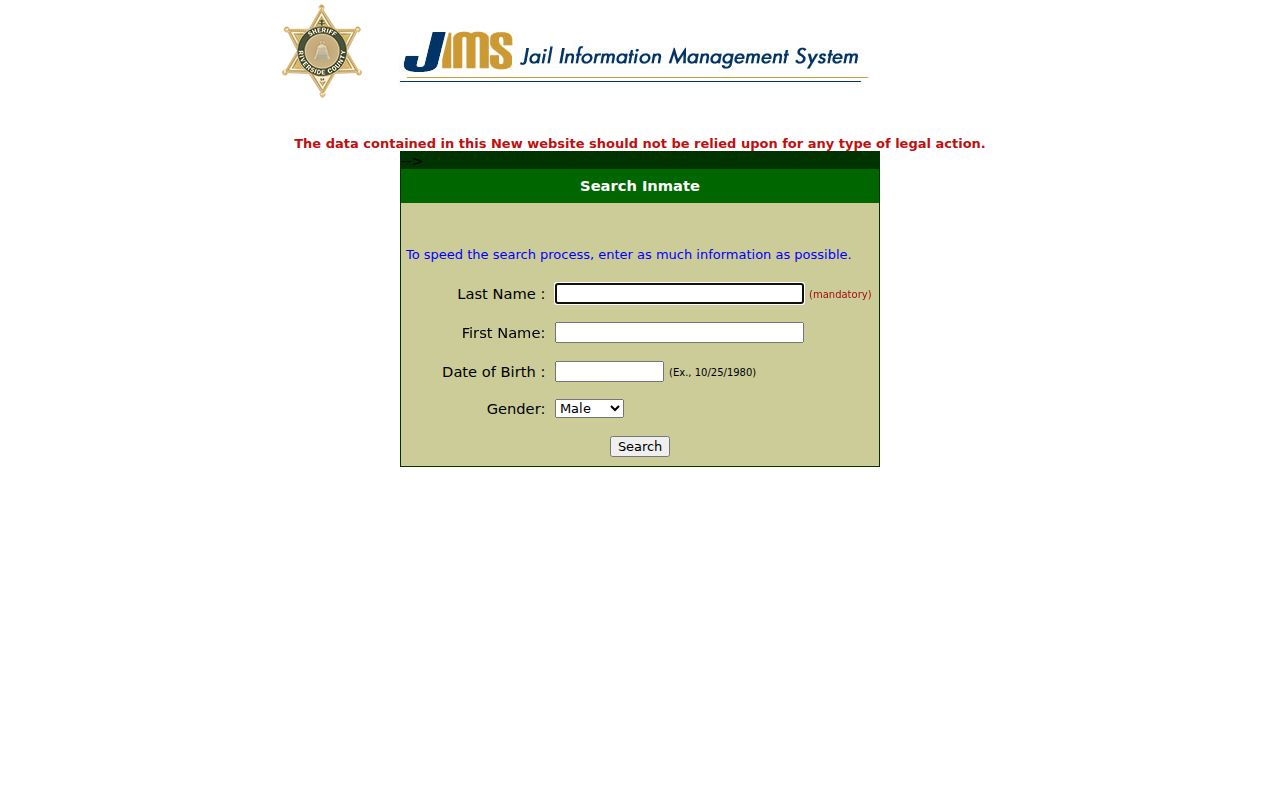
Last name, first name, or booking number can return a booking number, facility, booking or release data, court data, and publishable charges or bail.
For state custody, use the California Department of Corrections and Rehabilitation incarcerated person locator.
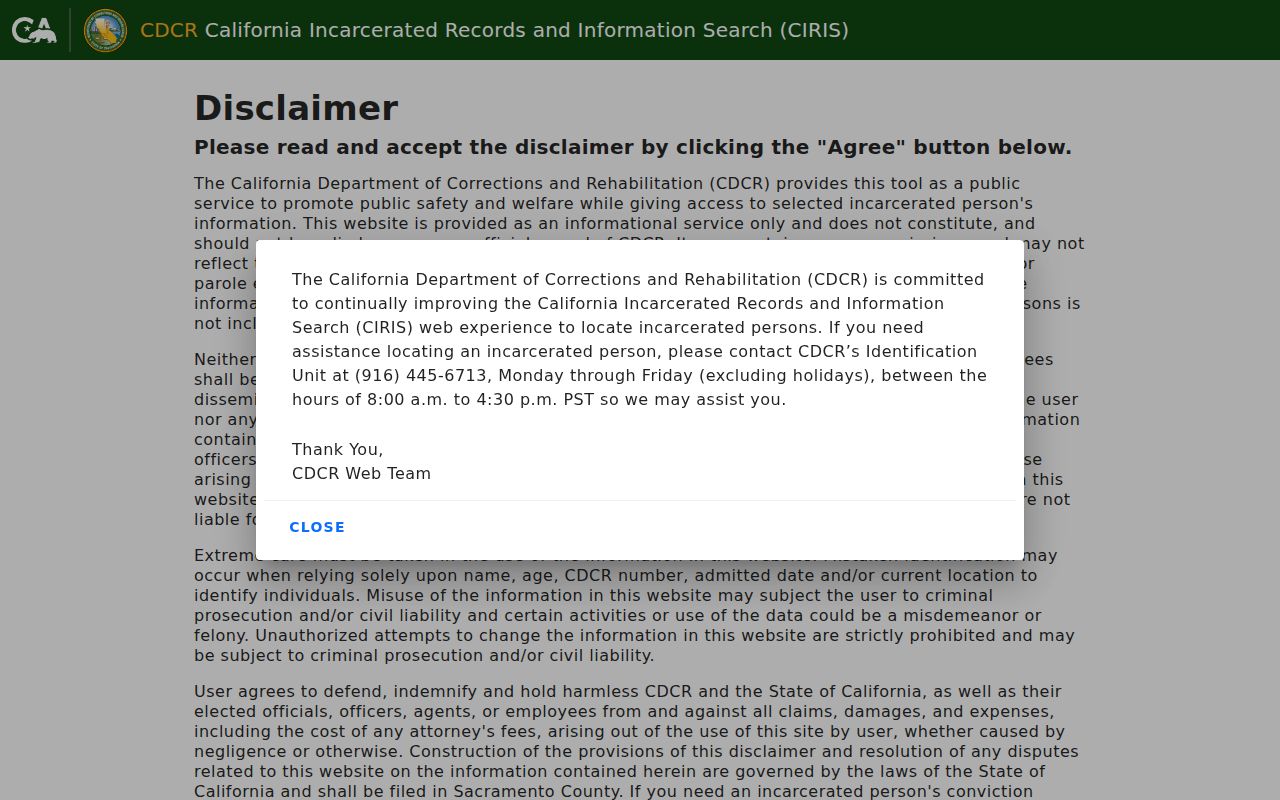
Search by CDCR number or name. The result is for a state incarcerated person and institution, not a Riverside County jail file.
The California Megan’s Law search offers name, map, address, and radius modes.
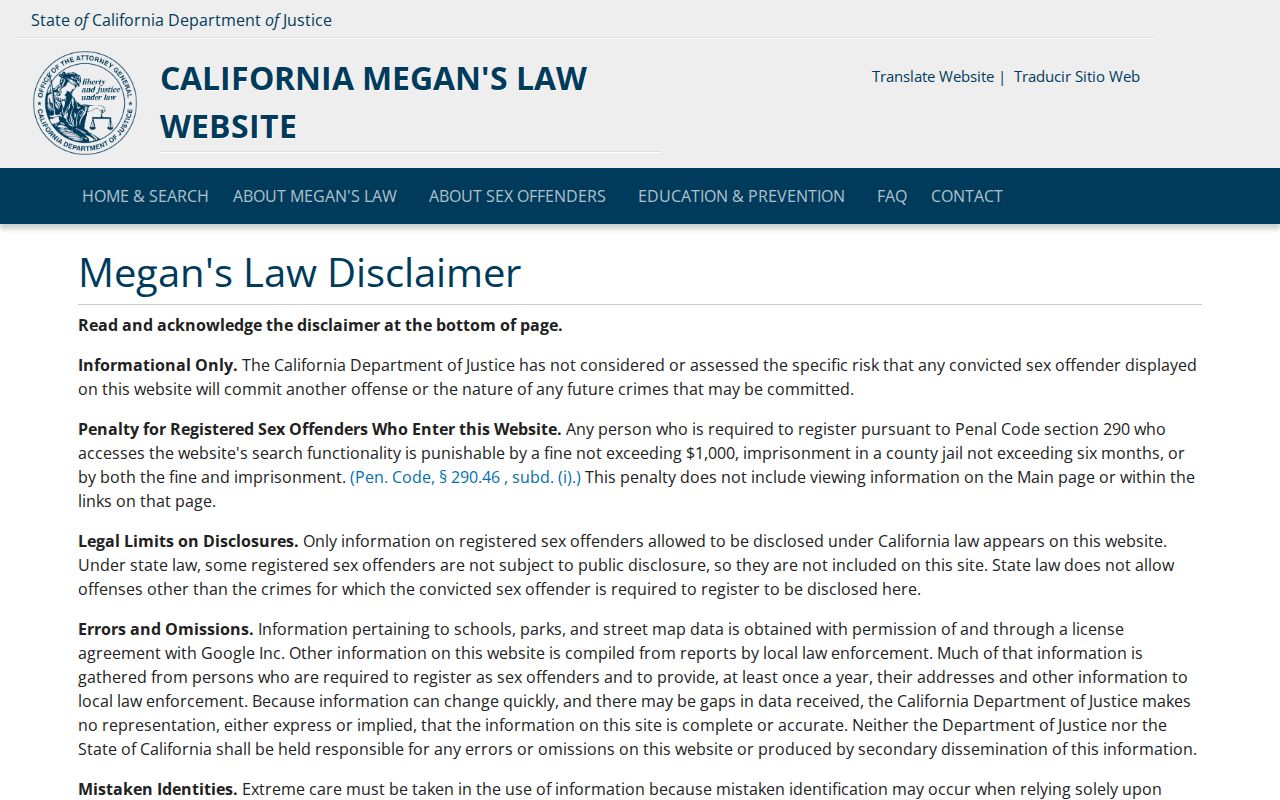
Public results may include a photo, physical description, offense, registration data, and a mapped address category. Use the legal warning on the registry and contact law enforcement about a suspected violation.
Protect a Riverside Resident Lookup
My Voter Status is a private self-lookup, not a name search of other Riverside residents. It asks first name, last name, birth date, and a California driver license or ID number, or directed last four SSN digits. A match returns the voter’s own status, address, precinct, polling, and ballot details. Elections Code §2194 limits file access to election, scholarly, journalistic, political, or governmental purposes.
Lawful personal use. Riverside records can support family history and civic research. Do not use a resident lookup to stalk, threaten, follow, harass, or intimidate anyone. California stalking and threat laws can apply, and Safe at Home addresses must not be reconstructed.
The Riverside Registrar accepts public-record requests by mail, email, fax, personal delivery, or NextRequest, verbally or in writing. Voter-file applications must state an approved purpose and safeguards. Safe at Home provides a substitute mailing address and confidential voter registration for qualifying survivors and reproductive-health personnel or patients.
California privacy law gives qualifying consumers rights to know, delete, correct, and limit covered-business data. The Delete Act provides a centralized deletion route through current California Privacy Protection Agency guidance. An opt-out does not change an official record. Correct errors with its custodian.