
Riverside Previous Residents by Era
A Riverside County address leaves several trails. Deeds identify parties to a transfer; directories and census schedules show people tied to a place. The starting record depends on the community, question, and age of the house. County records split at the web cutoff, leading a modern search to an office computer, Gateway Riverside, a library, museum file, or city counter.
| Source | Years it covers | Where held | What it shows |
|---|---|---|---|
| ACR recorder web index | January 1, 1974 to present | ACR Official Records | Parties, document dates, document numbers, and legal references |
| Gateway recorder indexes and books | 1893 to 1974, with earlier predecessor records | Gateway Riverside and ACR | Older grantor-grantee links and deed images or copies |
| Riverside assessment and parcel records | Current; archived years vary by office | RivCoView and ACR office computers | APN, situs, legal description, values, sales, and owner at the counter |
| Riverside criss-cross and reverse directories | Community-specific twentieth-century runs | Riverside Public Library, Museum, UCR | Listed occupants, addresses, spouses, and some occupations |
| Riverside federal census | 1900 to 1950; 1890 largely destroyed | NARA, library databases, FamilySearch | Households at enumeration dates |
| Riverside Sanborn maps, permits, and plats | Documented map editions; city files vary | Library, Museum, Public Works, ACR, city counters | Building form, changes, lot layout, and project dates |
For a Riverside address, use the recorder for transfers, assessment roll for parcel and owner, and a directory or census for a household snapshot. Maps and permits explain changed numbers, lots, or structures. No one source proves uninterrupted occupancy.
Note: Riverside library pages do not publish an exhaustive directory shelf list, so confirm the target community and year with local-history staff.
Riverside Previous-Resident Deed Records
Riverside ACR keeps two clocks. Clerk documents are indexed from January 1, 1893, when the county formed; recorder documents appear online from January 1, 1974. Office computers reach back to 1975, so 1974 and earlier research belongs at Gateway Riverside.
The Riverside ACR advanced document search supports name, document, date, type, and map or book-page routes. Name entry uses Last First MI for an individual. Exact Match keeps the entered order; Wildcard broadens it. Search results show party order, type, recording date, document number, book or map references, and selectable copy or certification options. The index proves that a party joined a recorded instrument, not that the party lived at the address.
| Field label | Type | Required | Options or format notes |
|---|---|---|---|
| Document Number | Text | No | Recorder or clerk identifier |
| Recording Date Start / End | Date text | No | Use mm/dd/yyyy |
| Name | Text | No | Last First MI; person or organization |
| Document Types | Selector or autocomplete | No | Deed, lien, map, marriage, FBN, and other indexed types |
| Advanced name searching | Checkbox | No | Exact and Wildcard behavior |
Riverside online index access is free, but copies are paid. Online orders select the record, add shipping, pay, and use mailed fulfillment; the stated average online processing time is 48 hours. In person, choose In Office, keep the SST order number, schedule an appointment, and bring cash, check, money order, or card. Mail requests state document type or title, full party names, estimated date, and APN; for pre-1976 documents, a no-number search is limited to two years after the estimated year.
Trace Riverside Previous Residents Through Deeds
The exact backward loop is a Riverside address to APN to owner to grantee to grantor, then back through the next acquisition. For the current address-to-parcel start, the Riverside Street Directory keeps the first step focused on an address before the deed work begins.
- Resolve today’s Riverside APN and legal description in RivCoView or the assessment roll. RivCoView accepts street number and street name or an APN.
- Identify the current Riverside owner at an ACR public-service-office computer. Ownership is available there even though the online property view withholds owner identity.
- Search that Riverside owner as grantee in the recorder index and select the acquisition deed.
- Read the grantor and legal description on the Riverside deed.
- Search the Riverside seller as grantee to find the seller’s earlier acquisition.
- Repeat the Riverside chain backward, using deeds of trust and releases only as corroboration.
- At the 1974 boundary, move to Gateway Riverside’s older grantor-grantee index and deed books. Carry APN, tract or lot, legal description, and book or page references.
The linked sequence is the Riverside chain of title. It works better than an old street-text search because parcel descriptions survive renaming, annexation, and rural-route changes.
- APN
- A Riverside assessor parcel number used to identify the tax parcel.
- Situs address
- The physical location of the Riverside land or structure.
- Owner mailing address
- Where assessment notices go, which may be a different residence, business, or mailing agent.
- Legal description
- The lot, block, tract, or metes-and-bounds language that identifies the land in a recorded instrument.
- Grantor
- The party conveying an interest in the recorded instrument.
- Grantee
- The party receiving that interest.
Riverside Owners and Previous Residents
RivCoView can show Riverside parcel geometry, APN, situs, legal-description cues, values, sales, permits, census and school layers. The owner and owner mailing address must be obtained at an ACR office computer. A situs tells where the land is; a mailing address tells where tax notices go. Neither label alone proves who slept there.
Use two kinds of evidence. A deed names parties to a transfer. A permit may name an owner, applicant, contractor, or project date. A directory or census records a household snapshot. An exemption can support an owner-occupancy inference, but it is not certainty. The Riverside County Assessor-County Clerk-Recorder explains the public office route that joins Riverside parcel facts to ownership.
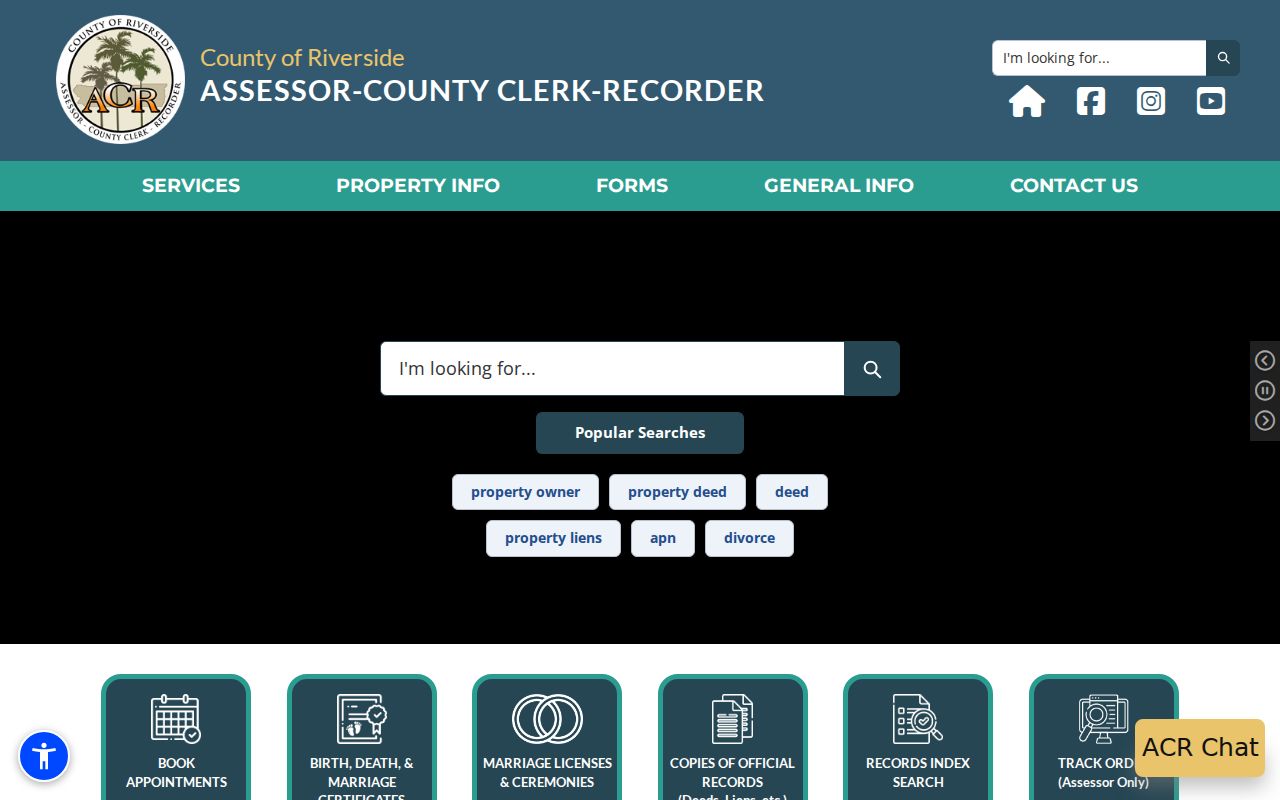
The Riverside ACR record path is a useful reminder to move from map facts to the public-service counter when a current owner name is needed.
Riverside Past Households: Directories, Census, Obituaries
Riverside County has no single countywide city-directory run. Name the community first: Riverside, Corona, Hemet-San Jacinto, Palm Springs or the Coachella Valley, Banning-Beaumont, or southwest county. Riverside Public Library Local History, the Museum of Riverside, and UC Riverside Special Collections hold different pieces. Exact shelf years are not published online. Search Riverside serial titles, including criss-cross, then ask Riverside staff about books, microfilm, reverse sections, and licensed scans. The Riverside Directory Book is the natural next stop for reading those collections.
A typical Riverside directory entry puts surname, given name or initial, spouse, occupation, and address together. Marks such as h, r, or wid vary by volume; some editions include owner or renter codes. The reverse section moves from address to occupant and sometimes a phone number. A directory is a publication snapshot, not a full household roll.
Pair a directory with a census before treating a name as a past resident:
- Choose the exact Riverside community, address, and directory year; record every adult, spelling, spouse, mark, and cross-reference.
- Check both the alphabetical and reverse sections, then compare nearby volumes for arrival or departure.
- Pair 1940 and 1950 directory entries with the matching Riverside census schedules. Federal schedules for Riverside County run from 1900 through 1950; the 1890 schedule was destroyed.
- Follow a disappearance with deeds, permits, newspapers, obituaries, cemetery records, and probate, while treating a blank volume as a gap that needs an explanation.
Riverside obituaries can connect a person to relatives and a place. Probate can identify a fiduciary, heirs, and sometimes real property. Neither proves continuous occupancy, so keep the source date and exact address with each clue.
Riverside Sanborn Maps for Previous Residents
The City of Riverside house-research guide points to Museum originals, library microfilm, historic maps, directories, and related property files. The Riverside property-research guide and the Library of Congress Sanborn collection give a sound starting path for Riverside map work, but Riverside Sanborn sheets show structures, not a complete occupant list.
| Edition | Where it helps | Limit |
|---|---|---|
| 1887 | Early mapped building footprint and street context | Not an occupant register |
| 1891 | Change before county records mature | Coverage follows mapped urban areas |
| 1895 | Post-formation address and structure comparison | Names are not the focus |
| 1908 | Lot, use, stories, materials, and additions | Compare with permits |
| 1951 | Mid-century changes and numbering clues | Map corrections need review |
| 1952 | Near-term comparison for a changing block | Still not proof of occupancy |
Start with the map key, locate the sheet, and compare editions for street numbers, building outlines, materials, stories, uses, additions, and fire-protection features. Note pasted correction slips. If a Riverside house lies outside mapped limits, turn to tract maps, assessor characteristics, permits, and aerial material. Museum originals may have handling limits, so microfilm or a digital copy is the safer first pass.
Riverside Permits, Tracts, Street Changes
Riverside’s official house-research route joins Riverside Building and Safety files, Public Works tract maps and the street-name index, Museum originals, library microfilm and directories, and ACR ownership and construction facts. Historical permit files are often address-arranged and may show an owner, architect, builder, addition, or demolition date. The exact start of a permit series varies by city.
Outside Riverside city, use the incorporated city’s planning or building counter, or County TLMA for unincorporated land, then ask the closest RCLS local-history branch or museum about local papers and directories. Riverside tract maps, including city examples from 1870 to 1954, can preserve the lot and street layout when an old number no longer matches a modern address.
Riverside street-name changes, annexation, rural-route conversion, directional prefixes, and duplicate names across the county can break a plain address search. Carry the APN, tract, lot, legal description, and map or book reference through each handoff. That is how a previous-resident trail stays tied to the same land.
Riverside's 1890-1900 Residents Trail
Riverside County was created in 1893 from San Bernardino and San Diego Counties. Riverside pre-boundary house searches may sit in predecessor records. The 1890 federal schedule was largely destroyed, so bridge with 1880 predecessor census, 1893-forward clerk and deed records, directories, tax or voter sources, and 1900 census.
Riverside federal material is a narrow history fallback, not the core route. PACER provides federal case search and document access, while the Central District of California covers Riverside County. A federal docket may add a dated party or legal event; it does not replace ACR, Gateway, local directories, permits, or probate.
The PACER federal case-search portal matters only when a Riverside house story reaches a federal filing.
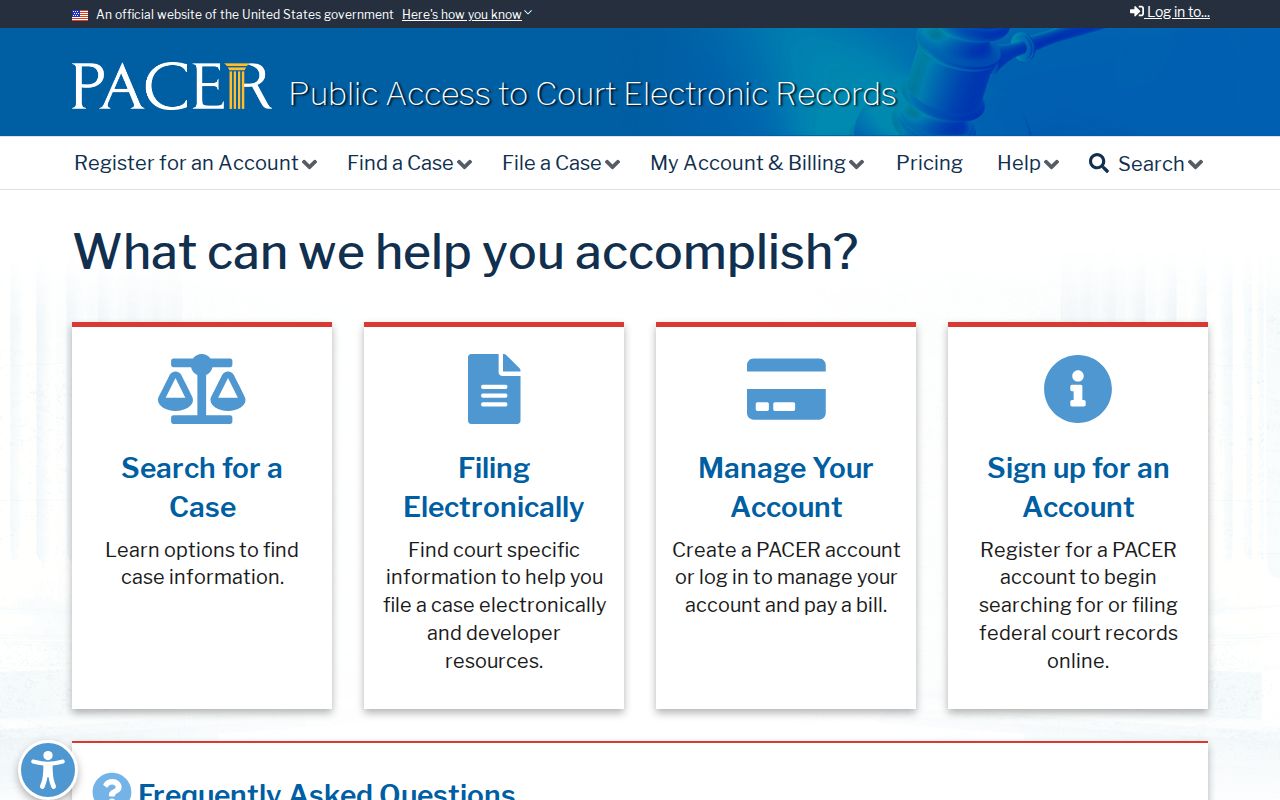
This federal-search view belongs at the edge of the Riverside workflow, after local land and household sources have been checked.
The Riverside Central District court reference helps identify the federal venue when that narrow fallback is justified.
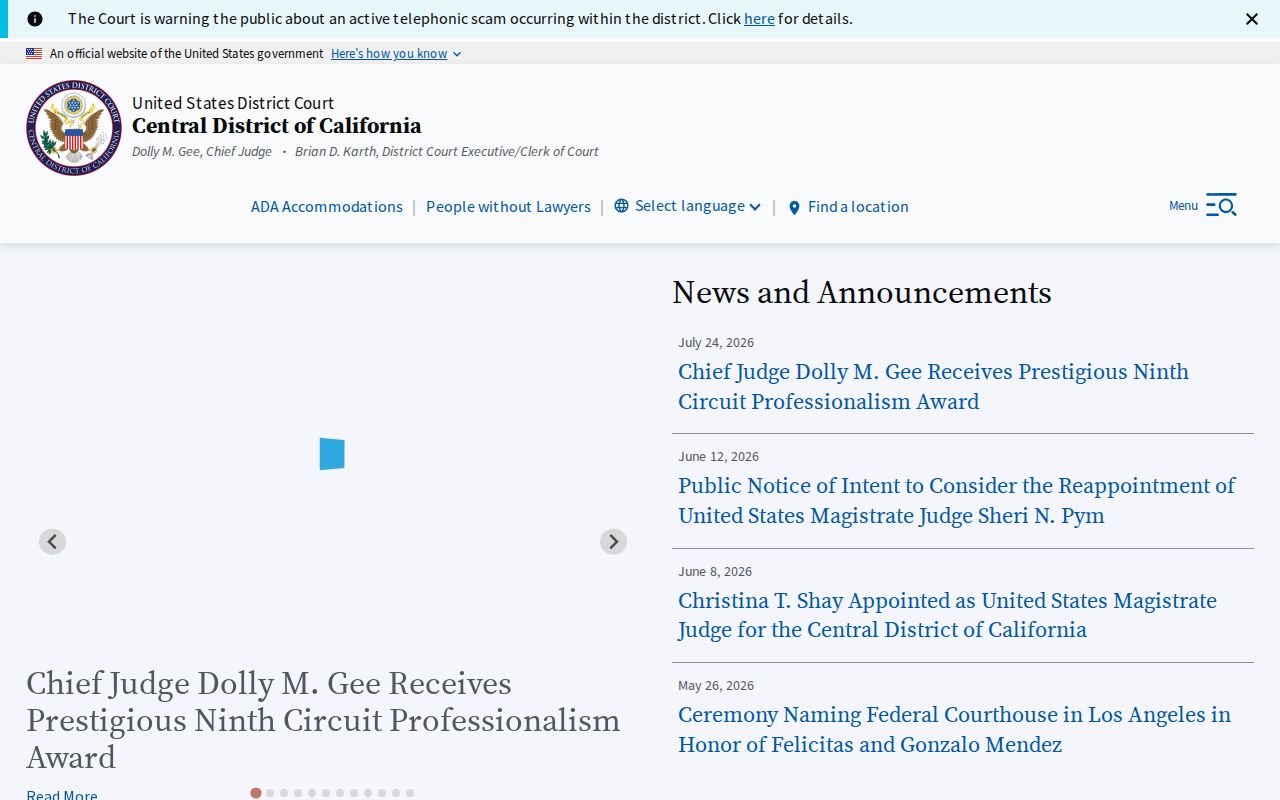
Keep any federal case number, date, party role, and document link separate from the deed chain so a court event is not mistaken for occupancy.
Lawful Riverside Previous-Resident Research
Riverside previous-resident research fits house history, family history, heir work, genealogy, and a careful study of how a parcel changed. It should stay tied to a lawful reason and a source record. Names and addresses may be stale, incomplete, or protected, and ownership does not establish daily presence.
Lawful use. Keep Riverside house-history work private and respectful. Do not use names, addresses, or record links to stalk, harass, track, or harm any living person.